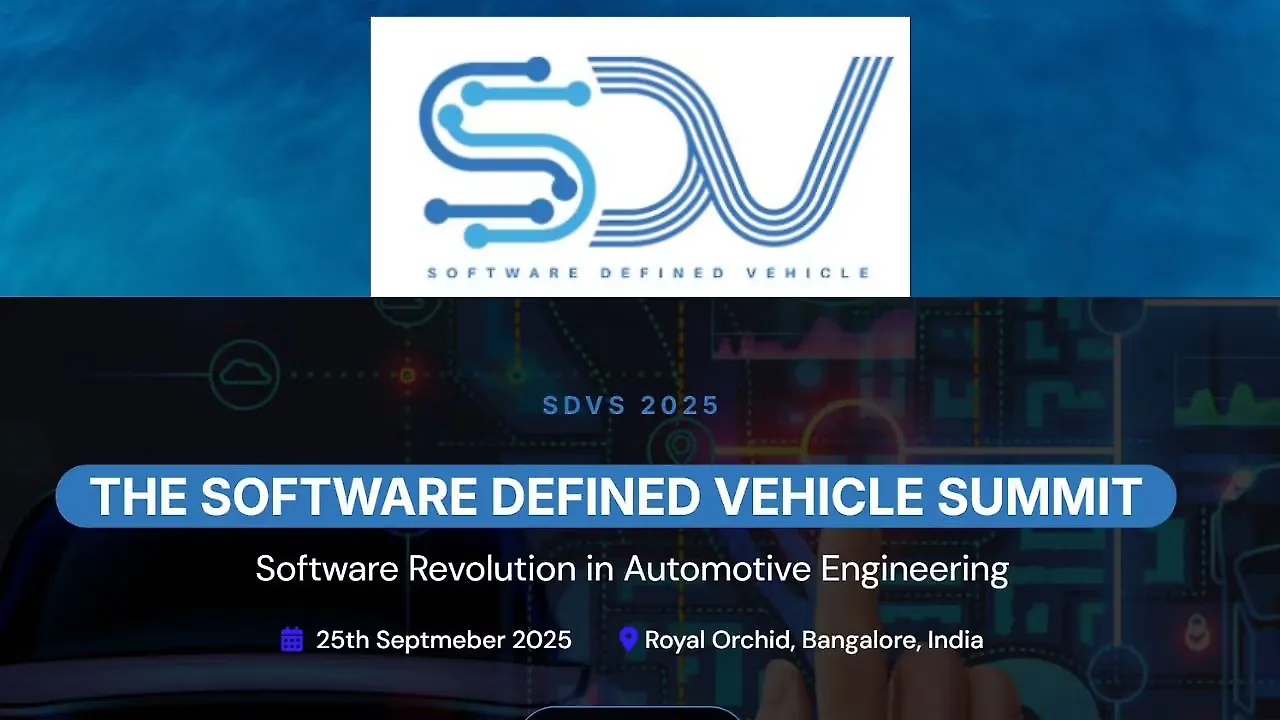
The automotive sector in India is preparing to shift gears once again, this time driven not by fuel or hardware, but by software. AAYERA has announced the second edition of the Software Defined Vehicle (SDV) Summit, scheduled to take place on 25th September 2025 at the Royal Orchid in Bengaluru. The event is expected to become a key point of convergence for automotive, technology, academic, and regulatory stakeholders looking to shape India’s next wave of mobility innovation.
Held under the theme “Code. Connect. Drive – Powering the Future of Indian Mobility through Software,” the SDV Summit 2025 aims to place software at the heart of the automotive conversation. The event will explore the future role of technologies such as centralised E/E architectures, cloud-native platforms, AI-enabled ADAS systems, and real-time over-the-air (OTA) updates. With India’s mobility space rapidly digitising, the summit intends to address how vehicles are not just machines anymore, but dynamic digital platforms.
Organisers are positioning the summit as a collaborative knowledge hub, with keynote addresses and panel discussions lined up on pressing topics like regulatory standards, cybersecurity, and scalable solutions for software-defined vehicles. The agenda includes live technology demonstrations and use-case studies designed to offer real-world insights into evolving vehicle software stacks. The involvement of IIT Hyderabad as an Associate Partner also reflects the growing synergy between academia and industry in this domain.
As India works towards electrification and autonomous mobility, the importance of software-defined systems cannot be overlooked. From embedded intelligence to predictive maintenance, the software layer is fast becoming the backbone of vehicle functionality and user experience. The summit’s focus on stakeholder collaboration suggests a broader push to bridge gaps between OEMs, tech providers, policymakers, and academia.